Showing posts with label Weird. Show all posts

The Crypt of Civilization


Under the foundation of Phoebe Hearst Memorial Hall at Oglethorpe University in Georgia, the United States, is a large room, that was sealed shut with a welded stainless steel door more than seventy five years ago. A plaque on this door strictly forbids anyone from attempting to open the door for another six thousand years.
Behind this steel door is an assortment of artifacts and documents comprising nearly all of humanity's knowledge, as it was in 1940. This room is the Crypt of Civilization, and it represents the first successful attempt to record and preserve a snapshot of human culture and civilization for future inhabitants of planet Earth. It was the world’s first time capsule.
crypt-of-civilization-3
Contents of the Crypt of Civilization. Photo credit: Oglethorpe University
The idea for the time capsule was conceived by Dr. Thornwell Jacobs in 1936, who was at that time the president of Oglethorpe University. While researching and teaching about ancient cultures, Jacobs was struck by the lack of information on past civilizations. This led him to the idea of creating a record of what life on earth was like, to lessen the struggles of future historians who might want to study our present civilization.
To assist him in this tremendous task, Dr. Jacobs sought the help of Thomas K. Peters, a pioneer American motion picture producer, photographer, and inventor. Peters was assigned the job of the project archivist and general manager of development and construction.
Work on the crypt commenced in August, 1937, and over the next three years, Peter’s crew collected an astounding number of items including Budweiser beer, dentures, male and female mannequins, aluminum foil, board games, plastic toys, dishes, Vaseline, pantyhose, electric razors, sewing machine, calculator, seeds and what not. You can find the complete inventory here. Additionally, more than six hundred thousand pages of written material compiling the vast knowledge we've acquired over the last 6,000 years was collected on microfilm. The crypt also contains voice recordings of historical figures such as Adolf Hitler, Joseph Stalin, Benito Mussolini, and Franklin Roosevelt. Unusual sound clips were also included, such as the cartoon character Popeye the Sailor and a champion hog caller. Dr. Jacobs refrained from including gold, silver, or jewels to make the crypt unattractive to vandals.
The site chosen for the preservation of the crypt was in the basement of Phoebe Hearst Hall at Oglethorpe University, which had previously held a swimming pool. The room measured twenty feet long, ten feet wide, and ten feet high and was built into the solid granite bedrock, seven feet underground. The walls were lined with porcelain enamel plates embedded in waterproof pitch. All items were placed inside steel receptacles with glass linings, filled with inert gas of nitrogen to prevent oxidation and aging.
crypt-of-civilization-6
Contents of the crypt. Photo credit: Oglethorpe University
The date of opening of the crypt was fixed at year 8113. This date was arrived by considering 1936 to be the halfway point since the establishment of the Egyptian calendar, which is believed to be 4241 B.C., and then adding the same number of years that had passed between then and 1936, which is 6,177 years.
The crypt was sealed shut on May 25, 1940, and a plaque with a message was affixed to it pleading future generations not to open the crypt until 8113. The message reads:
This Crypt contains memorials of the civilization which existed in the United States and the world at large during the first half of the twentieth century. In receptacles of stainless steel, in which the air has been replaced by inert gases, are encyclopedias, histories, scientific works, special editions of newspapers, travelogues, travel talks, cinema reels, models, phonograph records, and similar materials from which an idea of the state and nature of the civilization which existed from 1900 to 1950 can be ascertained. No jewels or precious metals are included.
We depend upon the laws of the county of DeKalb, the State of Georgia, and the government of the United States and their heirs, assigns, and successors, and upon the sense of sportsmanship of posterity for the continued preservation of this vault until the year 8113, at which time we direct that it shall be opened by authorities representing the above governmental agencies and the administration of Oglethorpe University. Until that time we beg of all persons that this door and the contents of the crypt within may remain inviolate.
The possibility that future generations could have forgotten to speak English was also considered. So a machine called a "Language Integrator" was placed in front of the sealed chamber to teach the openers how to speak English.
Jacob’s idea of the time capsule generated tremendous interest at that time, inspiring many identical projects elsewhere. Most notable among them are the Westinghouse Time Capsules prepared by the Westinghouse Electric & Manufacturing Company for the 1939 New York World's Fair. The container they built was shaped like a rocket and was referred to as a “capsule”, giving birth to the name “time capsule” that’s used today to describe these kinds of vessels. Westinghouse built another capsule in 1964. Both are buried 50 feet below Flushing Meadows–Corona Park, in New York City. They are scheduled to be opened at the same time in the year 6939.
crypt-of-civilization-1
Stainless Steel Door of the Crypt in Hearst Basement (partially obscured by drop ceiling added later.) Photo credit: Oglethorpe University
crypt-of-civilization-2
Photo credit: Oglethorpe University
crypt-of-civilization-4
Contents of the crypt. Photo credit: Oglethorpe University
crypt-of-civilization-5
Contents of the crypt. Photo credit: Oglethorpe University
crypt-of-civilization-7
Dr. Thornwell Jacobs. Photo credit: Oglethorpe University
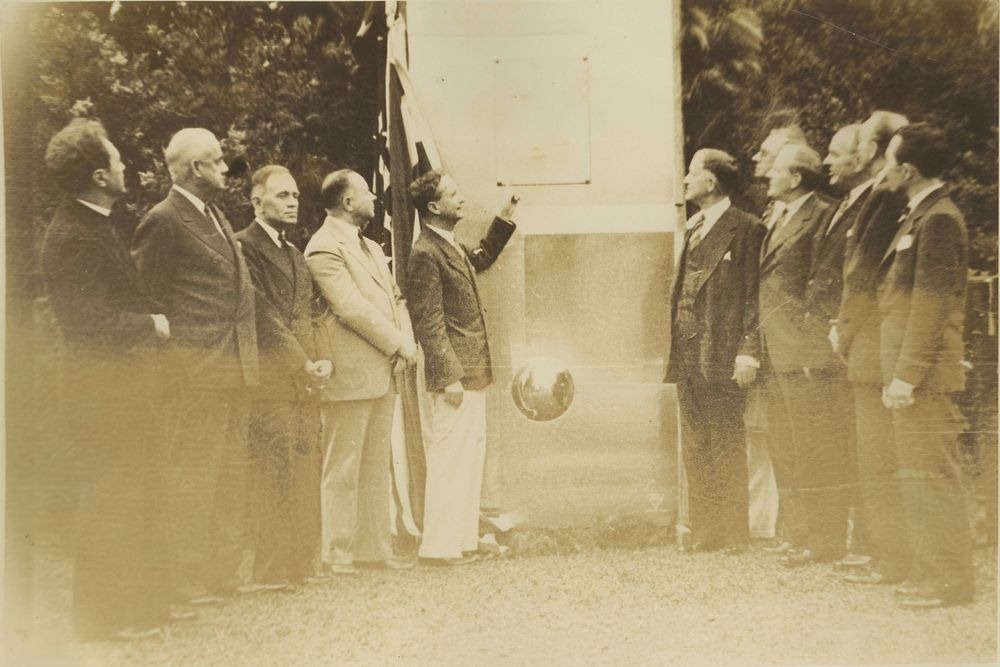
crypt-of-civilization-8
Dr. Jacobs and dignitaries at the Crypt dedication. Photo credit: Oglethorpe University
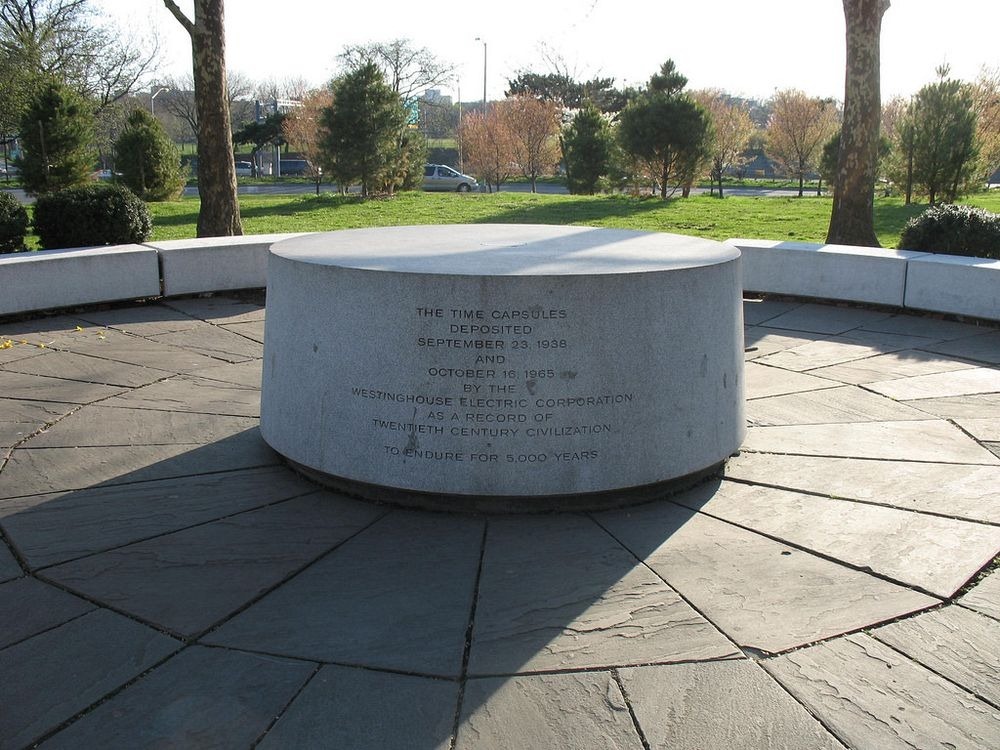
westinghouse-time-capsule-1
The Westinghouse Time Capsule at Flushing Meadows–Corona Park, in New York City. Photo credit: Gary Dunaier/Flickr
Sources: Oglethorpe University / Wikipedia / Scientific American / Damn Interesting
Subscribe to our Newsletter and get articles like this delieverd straight to your inbox

The Museum of Broken Relationships

The Museum of Broken Relationships An empty bottle of whiskey, a pair of fake breasts, a pair of tattered blue jeans, a toaster, an axe, and a stack of Brazilian Playboy magazines. These are some of the artifacts displayed at the Museum of Broken Relationships, a project that collects and displays the wreckage of failed romantic exploits. The museum has two locations—the original at Zagreb, Croatia, and a second establishment opened in Los Angeles, the US, about a year ago. The Museum was the brainchild of Olinka Vistica and Drazen Grubisic, two Croatian artists who fell out of love and couldn’t decide what they should do with the leftover items they had acquired during their four year relationship. They joked about starting a museum but didn’t thought about it seriously, until three years later, when Grubisic contacted Vistica with the idea in earnest. They asked their friends to donate items left behind from their break-ups and a collection was born.
 museum-broken-relationships-3
 Photo credit: Connie Ma/Flickr The collection was displayed in public for the first time in 2006. In the years that followed, the collection went on a world tour across more than twenty countries from Argentina to the Philippines, from South Africa to the United Kingdom. Along the way it gathered new items donated by members of the public, and the collection grew. The museum found a permanent home in 2010 in a small apartment in Zagreb, Croatia. Six years later, they found a second home in Los Angeles. Some of the most bizarre items in their collection includes:
  • an axe that a woman used to chop up her former lover's furniture, before neatly arranging the fragments into small heaps.
  • a pair of pink fake breasts, donated by a woman whose husband made her wear them during sex
  • a Brazilian Playboy collection a boyfriend stored at his ex’s place and failed to pick up
  • a pair of silicone implants that a demanding partner forced a woman to have, which she removed after breaking up
Even more interesting than the items are the accompanying text with each display that gives visitors a voyeuristic glimpse into the private lives of these anonymous people. The “toaster of vindication” is explained by its former owner, in the gleeful words: “When I moved out, and across the country, I took the toaster. That'll show you. How are you going to toast anything now?” The text next to a piece of belly button fluff reads: “D’s stomach had a particular arrangement of body hair that made his belly button prone to collecting lint. Occasionally, he’d extract a piece and stick it to my body, sweaty after sex. One day … I met his oddity with my own; I put the lint in a small bag and concealed it away in the drawer of my bedside table.” Another label reads: “We ran hot for two years, laying naked in bed for twelve hours a day, doting and dwelling on each other’s perfection. It was pure bliss for a 20-year-old.” "The Museum of Broken Relationships is an invitation to an empathetic journey to the depths of the human heart," Vištica said to LA Times. "It is a testimony to our ultimate need for love and connection despite the difficulties that go with it. It is a desire to connect visitors in meaningful ways across growing divides of class, community and culture that seem to define our world." museum-broken-relationships-1 Photo credit: Connie Ma/Flickr museum-broken-relationships-2 Photo credit: Connie Ma/Flickr museum-broken-relationships-4 Photo credit: Connie Ma/Flickr museum-broken-relationships-5 Photo credit: brokenships.com museum-broken-relationships-6 Photo credit: brokenships.com Sources: The Guardian / LA Times / Wikipedia Subscribe to our Newsletter and get articles like this delieverd straight to your inbox

The ‘Ancient Lights’ Windows of England


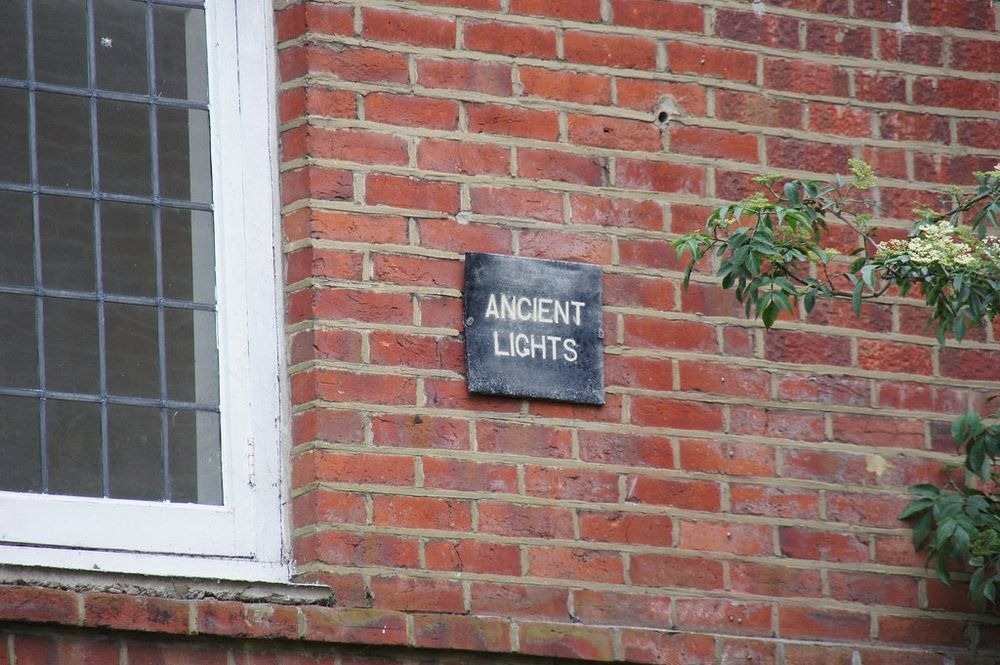
In many old brick buildings around London, you’ll find signs saying ‘Ancient Lights‘ marked beneath individual windows. The best example are the back windows of the houses on Albemarle Way, which are visible from Priory Church of the Order of Saint John just off the Clerkenwell Road. You can also find these odd signs near Chinatown and Covent Garden, particularly in back alleyways, and one in Newman Passage and another one in a pub just near Goodge Street tube station. Here is a map of ‘Ancient Lights’ signs around London.
The phenomenon is not unique to London. ‘Ancient Lights‘ signs can be found in Dorset, in Kent and in many places across England. What are they?
ancient-lights-4
'Ancient Lights' signs below windows in Clerkenwell, London. Photo credit: Mike Newman/Wikimedia
‘Ancient Lights’ or the ‘Right to light’ is an English property law that gives house owners the right to receive natural light from and through a window if that particular window has been receiving light uninterrupted for 20 years. Once a person gains the right to ancient lights, the owner of the adjoining land cannot obscure them, such as by erecting a building, raising a wall or planting trees. In the past, neighbors with right to light have sued neighbors on grounds of ‘nuisance’ for obstruction of light, and have won in courts of law.
The total deprivation of light is not necessary for the land owner to enforce the law. He can challenge the neighbor if he feels he “cannot enjoy the light in so free and ample a manner as he did before,” as explained by Collins Dictionary of Law. The levels of acceptable light, however, have not been objectively quantified. Instead, the law uses vague expressions such as “sufficient light according to the ordinary notions of mankind”. This has given rise to “specialists and expert witnesses in this field”, and the court relies on them.
One so-called expert, Mr. Percy Waldram, suggested that ordinary people require one foot-candle of luminance (approximately ten lux) for reading and other work involving visual discrimination. Waldram's methods has been in use since the 1920s, but recently they have been subjected to much criticism.
The law originated in England in 1663, but its current form is based on the Prescription Act 1832.
ancient-lights-3
Photo credit: Matt Brown/Flickr
ancient-lights-1
‘Ancient light’ signs under a window in Bournemouth, Dorset. Photo credit: Alwyn Ladell/Flickr
ancient-lights-2
‘Ancient light’ signs near a window in Bournemouth, Dorset. Photo credit: Alwyn Ladell/Flickr
Sources: Wikipedia / Freedictionary.com / Encyclopedia Britannica / Designing Buildings


Subscribe to our Newsletter and get articles like this delieverd straight to your inbox

Tehachapi Loop

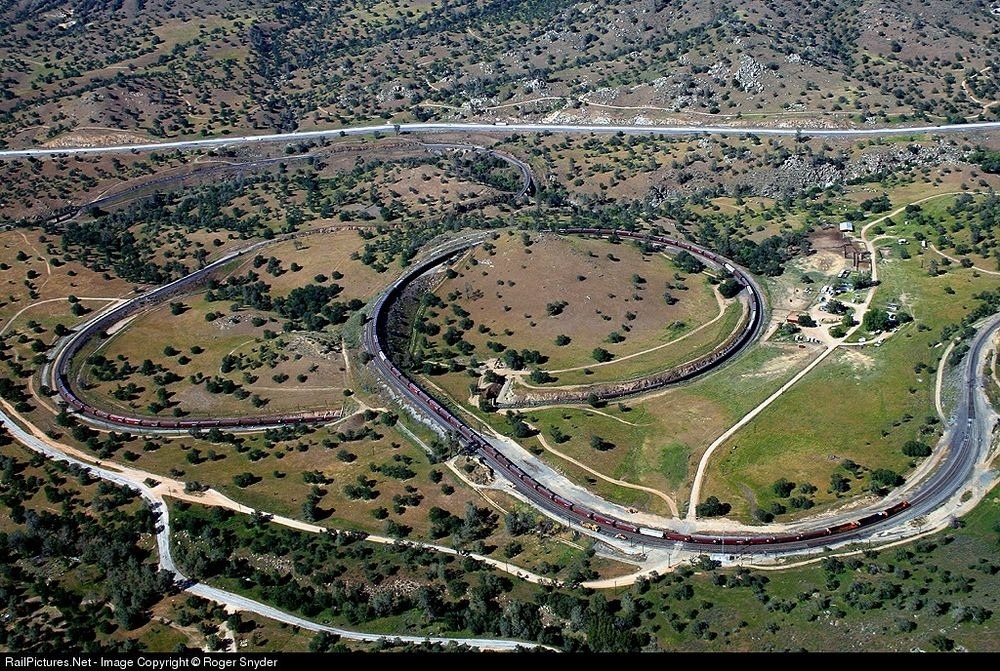
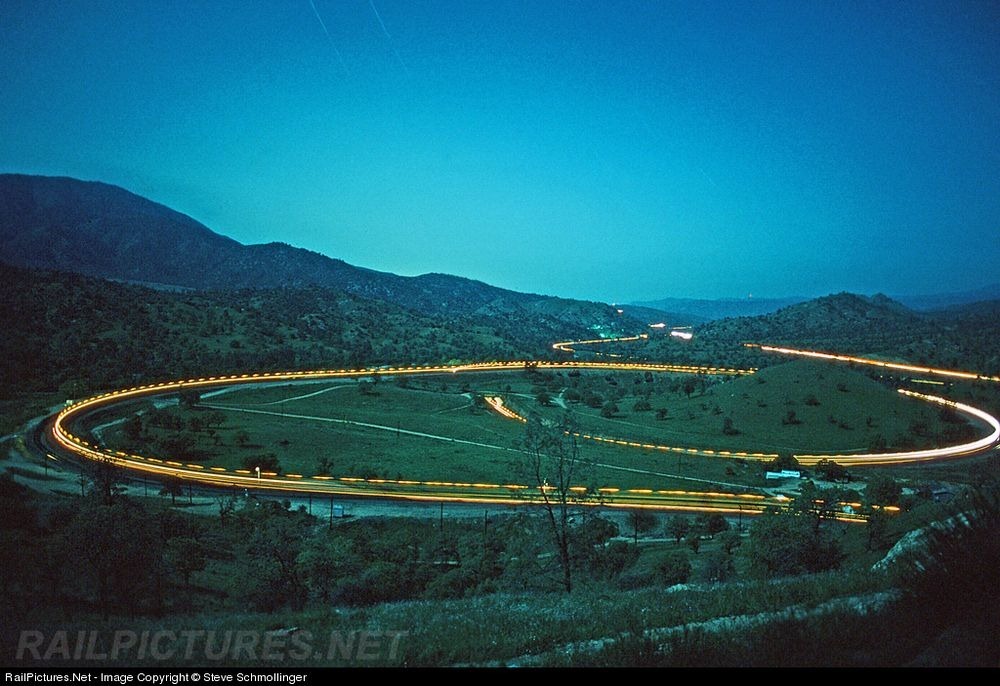
The Tehachapi Loop is an iconic spiral loop, 1.17 km long, that passes over itself as it gains height on the railroad main line through Tehachapi Pass, in south central California. The loop was constructed in the latter half of the 19th century as part of Southern Pacific's main line through southern California, which had to cross the Tehachapi Mountain range. More than 3,000 Chinese immigrant laborers toiled for two years cutting through the solid granite with blasting powder, and then clearing the debris using picks, shovels, and horse drawn carts, to lay the Tehachapi Pass Railroad Line. The line, which climbs out of the San Joaquin Valley and through the Tehachapi Mountains to Mojave in the Antelope Valley, was part of the last and final link of the first railroad line connecting San Francisco to Los Angeles.
tehachapi-loop-2
Photo credit: Roger Snyder
The aim of the Tehachapi Loop was to gain elevation at a manageable gradient, and this has worked so well for nearly 140 years that it continues to be used even today. In fact, it one of the busiest single-track mainlines in the world with an average of almost 40 trains passing through the Loop each day. The frequent trains and the spectacular scenery makes the Loop a prime draw for trainspotters in the country. The engineering feat has earned the Loop the dual status of being a National Historic Civil Engineering Landmark as well as a California Historical Landmark.
Related Reading: Brusio Spiral Viaduct in Switzerland
tehachapi-loop-3
Photo credit: Chris Starnes
tehachapi-loop-4
Photo credit: Roger Snyder
tehachapi-loop-5
Photo credit: Steve Schmollinger
tehachapi-loop-6
Photo credit: Roger Snyder
tehachapi-loop-7
Photo credit: IOaD sToNe/Flickr
Sources: Wikipedia / American-Rails.com / www.letsgoseeit.com


Subscribe to our Newsletter and get articles like this delieverd straight to your inbox

Annual Red Crab Migration on Christmas Island

Christmas Island is a small Australian island in the Indian Ocean, 2,600 kilometers northwest of the city of Perth, that is home to many species of animal and plant. The island is particularly noted for its prodigious populations of Christmas Island red crabs, a species of land crab that is endemic to the island, and their spectacular migration from the forest to the coast each year during the breeding season.
JPF34934
At the beginning of the wet season (which is usually October / November), over 50 million adult red crabs suddenly start migrating from the forest to the coast to breed. The migration is usually synchronized all over the island. The males lead the first wave of the migration and are joined by females as they progress. The crabs take about five to seven days to reach the sea. The rains and moist overcast conditions make their journey to the sea long and difficult.
During peak migration times, sections of roads where crabs cross in high numbers are closed to vehicles for short periods of time. The bright red carapaces and sheer density of crabs make their routes to the sea observable from the air.
After mating the females release their eggs into small burrows on the sea where the hatch, and the young larvae develop into tiny small crabs. After remaining about a month in the ocean, the young crabs, only five millimeters across, accompanied by the adults make their long trek back home. Upon reaching the inland, the crabs disappear into rocky outcrops, fallen tree branches and debris on the forest floor for the next three years.
Human activities have led to increased numbers of red crabs being killed during their annual migration. The crabs risk dehydration when they are forced to cross areas cleared of forest cover and many thousands of adults and young are crushed by vehicles as they cross the roads. To protect the crabs from being crushed by vehicles, staff of Christmas Island National Park some roads are also temporarily closed off and crab crossing signs erected at places. Walls and plastic fencing along the roads are also built to funnel the crabs to the 'crab crossings' and 'crab bridges' where they may safely cross.
The crab migration and the crab bridges have become a great tourist attraction.
red-crab-migration-2
red-crab-migration-3

red-crab-migration-5
red-crab-migration-6
red-crab-migration-7
red-crab-migration-8
red-crab-migration-9
red-crab-migration-10
red-crab-migration-11
red-crab-migration-12
Source

The Witches' Weigh House in Oudewater


In medieval Netherlands, weigh houses were a common feature in many markets up and down the country. They were run by the local authorities, and traders were required to weigh their goods before they were sold. The authorities would then levy a tax on the goods transported through or sold within the city.
Many a times, people accused of witchcraft would be dragged to a weigh house to be weighed. It was believed that a witch weighed next to nothing. After all, how could they fly on a broomstick? The Heksenwaag (Witches' scale) in the town of Oudewater became famous for such witch trails.
heksenwaag-oudewater-6
A witch trial at the Heksenwaag, in Oudewater. Photo credit: Memory of the Netherlands
Witch trials were often rigged resulting in the burning or drowning of hundreds of innocent victims all across Europe, but the people of Oudewater refused to take part in the delusion of witchcraft. The Heksenwaag provided a fair weighing process to the accused. It is said that the Roman Emperor Charles V granted Oudewater the privilege to weigh persons suspected of witchcraft and to issue certificates if found to be of normal weight.
Legend has it, that in 1545, Charles V doubted the outcome of a witch trail at a Dutch village where a woman had been weighed and was found too light. He ordered a second weighing at Oudewater, showing her to have a weight of 100 pounds, thus saving her. As a sign of gratitude for the correctness of the staff at the weigh-house he granted them the privilege. Nobody here was ever convicted of being a witch.
Sadly, not many people had the fortune of getting themselves weighed at Oudewater because many judges refused to allow such trials. A single rumor or an unsubstantiated witness was enough to convict innocent people of sorcery. Historical records account for only 13 such trials at the Heksenwaag between the period 1674 and 1743.
Today, Heksenwaag is a museum and a tourist attraction. Visitors can weigh themselves on an ancient oak scale and receive certificates declaring them as not witches, just like they used to hand out in the old days.
heksenwaag-oudewater-1
The weigh house. Photo credit: Rumex12/Wikimedia
heksenwaag-oudewater-4
Photo credit: Alan Grinberg/Flickr
heksenwaag-oudewater-3
Photo credit: bert knottenbeld/Flickr
heksenwaag-oudewater-5
The certificate visitors receive after passing the weight test. Photo credit: Louise15101970/Tripadvisor.com
Sources: Holland.com / Wikipedia / www.heksenwaag.nl / Rechtsgeschiedenis Blog


Subscribe to our Newsletter and get articles like this delieverd straight to your inbox