The Great Yarmouth Suspension Bridge Collapse of 1845

The year was 1845 and the Cooke's Royal Circus was in town. All of Great Yarmouth was brimming with excitement. The Cooke’s Royal Circus was a prominent traveling show that traces its origin back to the 1780s in Scotland under the leadership of Thomas Cooke. As the 19th century unfolded, the performing troupe journeyed extensively across Scotland and England, making stops in both major cities and smaller locales. While their expertise encompassed various disciplines like equestrian performances, numerous circus members displayed talents as acrobats, strongmen, and contortionists. At Great Yarmouth, the Cooke's Royal Circus promised a new trick—a clown named Arthur Nelson would sail up the River Bure in a washtub pulled by four geese.

Depiction of the collapse of the bridge in the “Illustrated London News”.


Click Here to read more Amusing Planet

Wanggongchang Explosion: A 17th Century Disaster That Nearly Destroyed Beijing

Gunpowder, a volatile and explosive substance composed of saltpeter, charcoal, and sulfur, has played a significant role in shaping history. However, its storage and handling have often resulted in catastrophic accidents. One of the most devastating gunpowder related accidents occurred in Beijing in the early 17th century. The explosion that resulted has been ranked as one of the biggest in history.

The incident occurred at the Wanggongchang Armory, which was one of several arms depot situated within the capital. Administered by the Ministry of Works, these depots were responsible for both the production of gunpowder and the storage of armor, firearms, bows, and ammunition. These armories held great significance for Beijing's security and the preparedness of Ming China's defense forces. This is why they were strategically placed within the heart of the capital, shielded by its formidable and robust walls. Unfortunately, this was also the area where a majority of the population resided. It didn't take long for the tragic consequences of establishing an explosives manufacturing facility in a residential vicinity to become evident.

Photo credit: vecstock/Freepik


Click Here to read more Amusing Planet

Artworks That Were Hung Upside Down

Art evoke emotions, provoke thoughts, and inspire, but it also challenges our perception because art eludes simple definition. The baffling nature of art lies in its power to mean different things to different individuals, fostering a diverse tapestry of interpretations that defy singular understanding. Even some of the most experienced curators have found it difficult to navigate the intricate corridors of artistic expression, as evidenced in these eight silly examples, where artworks have been inadvertently exhibited the wrong way up.

Piet Mondrian, New York City 1 (1941)

“New York City I” by Piet Mondrian, as it hangs at Musée National d'Art Moderne in Paris, upside down.


Click Here to read more Amusing Planet

Skeleton Lovers

Embracing, the act of holding someone or something close, goes far beyond a physical gesture; it is a powerful expression of love that transcends language, culture and time. Whether it's a warm hug between friends, a tight squeeze from a parent to a child, or an intimate embrace between romantic partners, the act of embracing communicates a deep and profound connection.

When archeologists dig up graves, sometimes they find manifestations of love through this form of expression—skeletal bodies of couples buried together, still locked in embrace. Who were they and how did they end up six feet under?

Modern scientific methods have allowed us to unravel some of these mysteries, giving us an opportunity to glimpse into the final moments of these prehistoric couples, bound together even in death.


Click Here to read more Amusing Planet
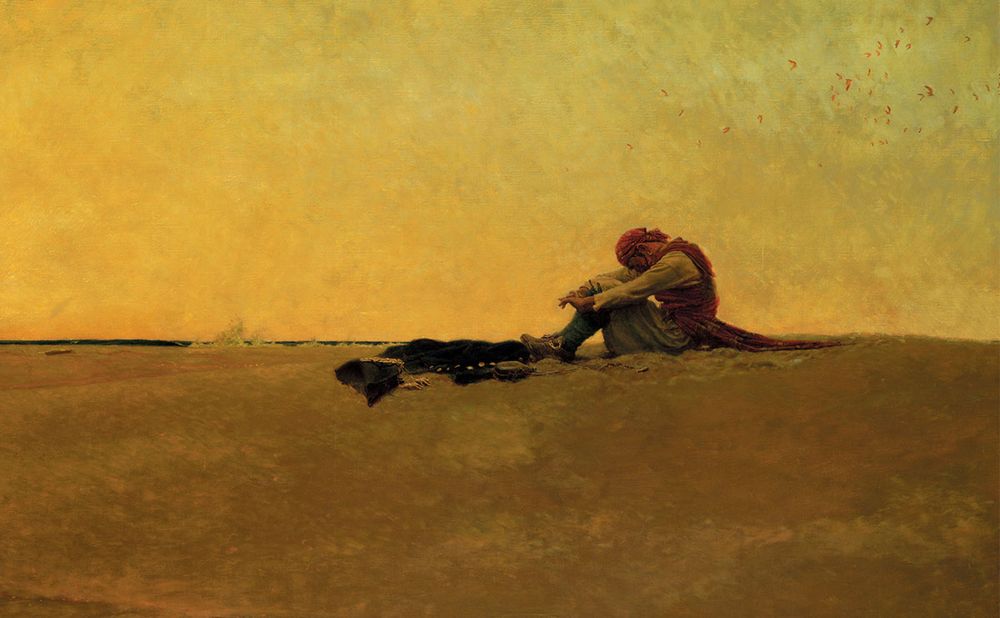
Leendert Hasenbosch: The Gay Soldier Who Was Marooned on a Deserted Island

In January 1726, a British East India Company ship named James and Mary landed on Ascension Island. While exploring the island, the crew stumbled upon a tent containing belongings that suggested the presence of a castaway who had likely survived on the island for some time. Although no body or skeleton was found, the crew speculated that the man had perished due to thirst.

Inside the tent, the sailors made an intriguing discovery— a diary belonging to the castaway, which explained how the castaway had found himself on the island. The diary revealed that he was a Dutch sailor who had been found guilty of sodomy and was marooned on the island as punishment. That same year, the translated diary was published under the title Sodomy Punish'd , of which only a single copy exist in the British Library today. This unique journal offers a rare and firsthand account of the challenges and experiences endured by a gay man during a period when same-sex relationships were punishable by death.

“Marooned” by Howard Pyle.


Click Here to read more Amusing Planet

The Wolf of Ansbach

Like most wild animals, wolves predominantly inhabit remote areas, maintaining a natural inclination and capability to steer clear of human presence. But under certain circumstances, such as human encroachment into wolf territories and lack of game, encounters between wolves and humans can occur leading to potential conflicts and rare instances of attacks. Throughout history, spanning back to the medieval era, there exists a documented record of numerous instances where humans have encountered and fallen victim to wolf attacks, numbering in the thousands. Among these historical accounts, there is one in particular that is noteworthy.

The hunting of the wolf of Ansbach.


Click Here to read more Amusing Planet