PLTD Apung 1: The Tsunami Ship Memorial

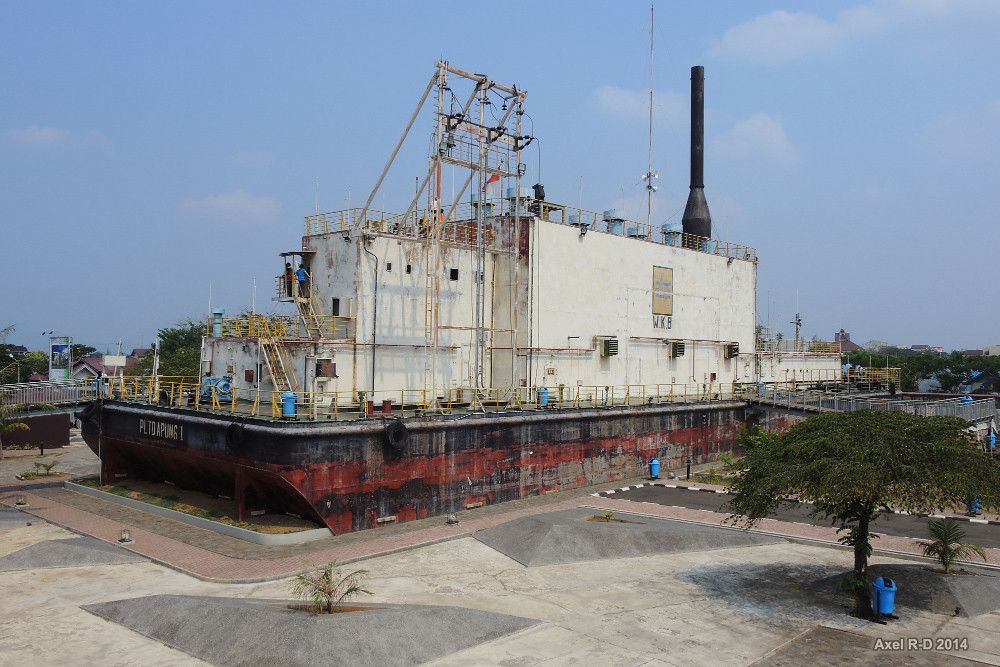
Less than a kilometer from the Tsunami Museum in Banda Aceh, Indonesia, stands another monument that conveys the true power of nature that was unleashed on 26 December 2004. It’s a large floating diesel generator vessel that was carried far inland by the tsunami and got stranded in the middle of a residential area in the city. Preserved in this location, the ship serves as a lasting monument to the havoc wrought by the tsunami's devastation.

Photo credit: Rizky Adriansyah/Flickr


Click Here to read more Amusing Planet

The Portuguese Bank Note Scandal of 1925

Throughout the annals of history there have been individuals who have sought to deceive others by producing counterfeit versions of precious goods, and one of the most damaging of these items is counterfeit money. Counterfeit currency erodes the very foundations of trust and stability that underpin a healthy economy, causing people to question the authenticity of the currency they hold, while also causing inflation and loss of purchasing power, as well as loss of credibility of a country's financial institution in the global economy.

One of the most notable counterfeiters of the 20th century was the Portuguese criminal Alves dos Reis, who nearly wrecked the Portuguese economy by exploiting loopholes and poor practices in his country’s financial system. Unlike other criminals, Alves dos Reis’ genius was that he did not counterfeit Portuguese currency himself. Instead, his network managed to deceive a British banknote-producing company, leading them to believe that they were working on behalf of the Portuguese government, thereby tricking them into printing money for them.

. One of the banknotes fraudulently issued by Alves dos Reis.


Click Here to read more Amusing Planet
Uraniborg: An Observatory Without a Telescope

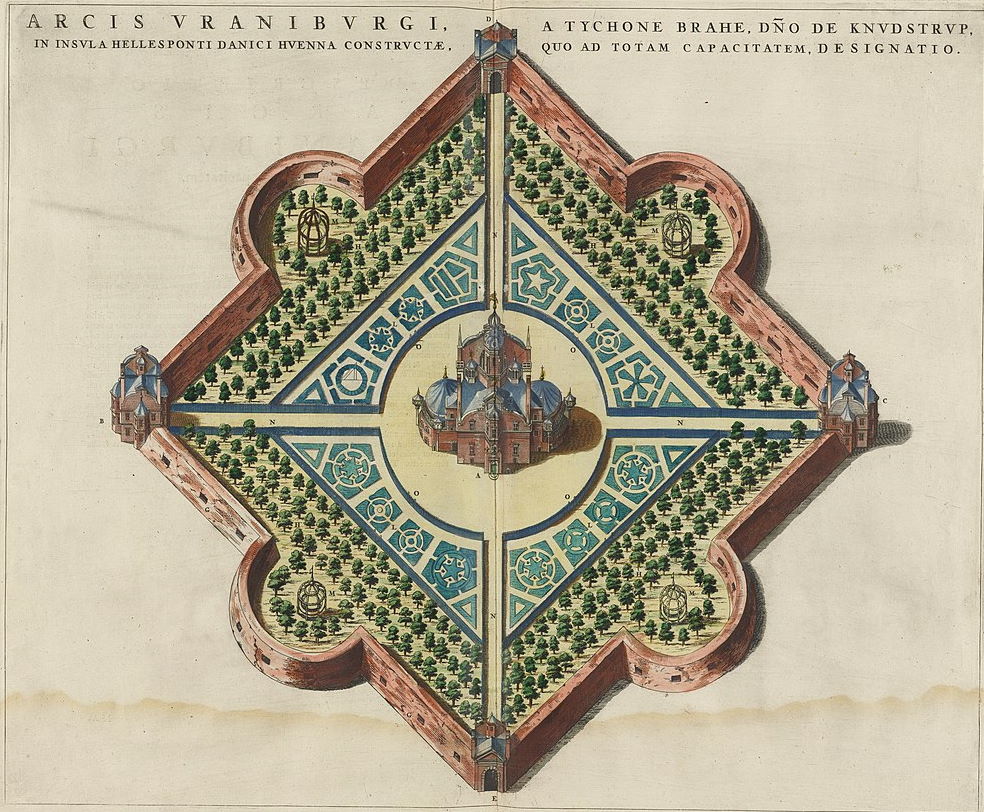
Before the invention of the telescope, astronomers relied on a variety of tools and techniques to observe and study the celestial objects and phenomena. The simplest and the most ancient method was unaided observation with the naked eye. However, early astronomers extended their observational capabilities through a variety of instruments like the astrolabe, quadrant, sextant, and armillary sphere. One of the last major astronomers who harnessed these tools to achieve remarkably precise astronomical observations was Danish astronomer Tycho Brahe.

Tycho Brahe's Uraniborg observatory.


Click Here to read more Amusing Planet
That Time When Hartlepool Hanged a Monkey

On the coast of northeast England, lies the town of Hartlepool, and from this large town in County Durham comes a humorous legend about a monkey. The legend dates back to the early 19th century, during the Napoleonic Wars, an era marked by heightened fear and wary, and suspicion of potential French invasion.

According to the tale, on a stormy night, a French ship was discovered sinking off the coast of Hartlepool. Among the wreckage, the townspeople found a lone survivor—the ship's monkey, dressed in a tiny military uniform, likely for the entertainment of the crew. The people of Hartlepool were unfamiliar with monkeys and had never encountered a French person before. However, they had seen British cartoons that depicted the French as monkey-like beings with tails and claws.


Click Here to read more Amusing Planet

The 1,000-Ton Nazi Tank That Was Never Built

In the midst of the Second World War, the Nazis unveiled prototypes for an array of extraordinary weaponry, spanning colossal aircraft, advanced ships, rockets, railway and notably, tanks. Adolf Hitler championed the development of these so-called "war-winning" armaments and lent his backing to numerous initiatives that led to the creation of remarkable achievements, including the world's most massive railway gun and the formidable 188-ton Maus tank, among various others. However, Hitler remained unsatisfied, yearning for even greater innovations.

The Landkreuzer P. 1000 Ratte—a proposed 1,000 ton tank. For comparison, the heaviest tank ever manufactured weighs 188 tons.


Click Here to read more Amusing Planet

The Great Yarmouth Suspension Bridge Collapse of 1845

The year was 1845 and the Cooke's Royal Circus was in town. All of Great Yarmouth was brimming with excitement. The Cooke’s Royal Circus was a prominent traveling show that traces its origin back to the 1780s in Scotland under the leadership of Thomas Cooke. As the 19th century unfolded, the performing troupe journeyed extensively across Scotland and England, making stops in both major cities and smaller locales. While their expertise encompassed various disciplines like equestrian performances, numerous circus members displayed talents as acrobats, strongmen, and contortionists. At Great Yarmouth, the Cooke's Royal Circus promised a new trick—a clown named Arthur Nelson would sail up the River Bure in a washtub pulled by four geese.

Depiction of the collapse of the bridge in the “Illustrated London News”.


Click Here to read more Amusing Planet